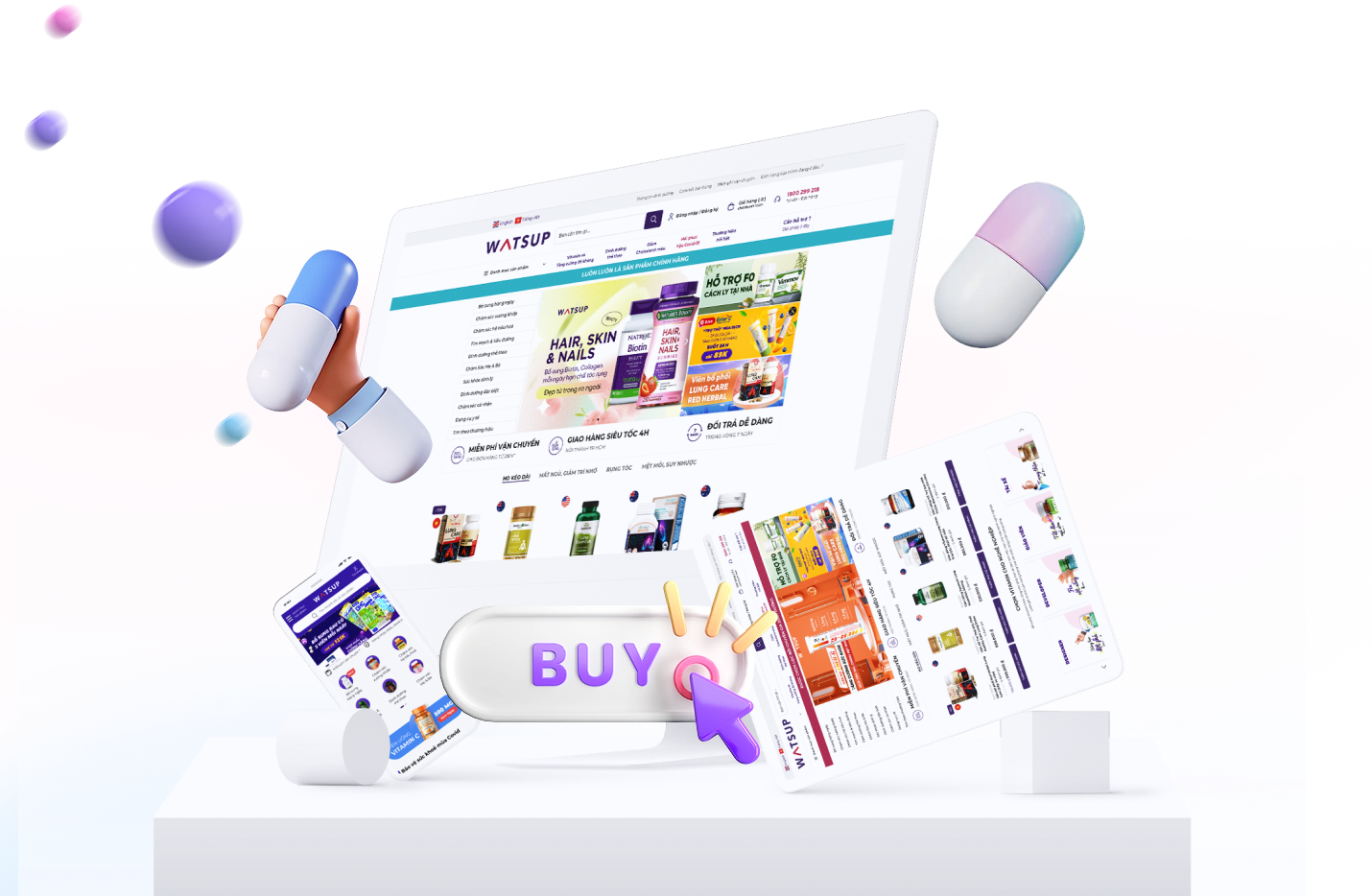
Watsup.vn - How I Created a New Brand and Website for My Start-Up
In this case study, I’ll share my process for creating watsup.vn, from conceptualization to launch and beyond. I’ll also discuss the challenges I faced and the lessons I learned along the way. I hope that my story will inspire and inform others who are considering starting their own e-commerce business.
In order to keep the post concise, I have divided the content into two sections: Marketing and UI/UX Design. The marketing section will focus on strategies for increasing brand awareness and sales, while the UI/UX Design section will cover the design and user experience elements of the project.
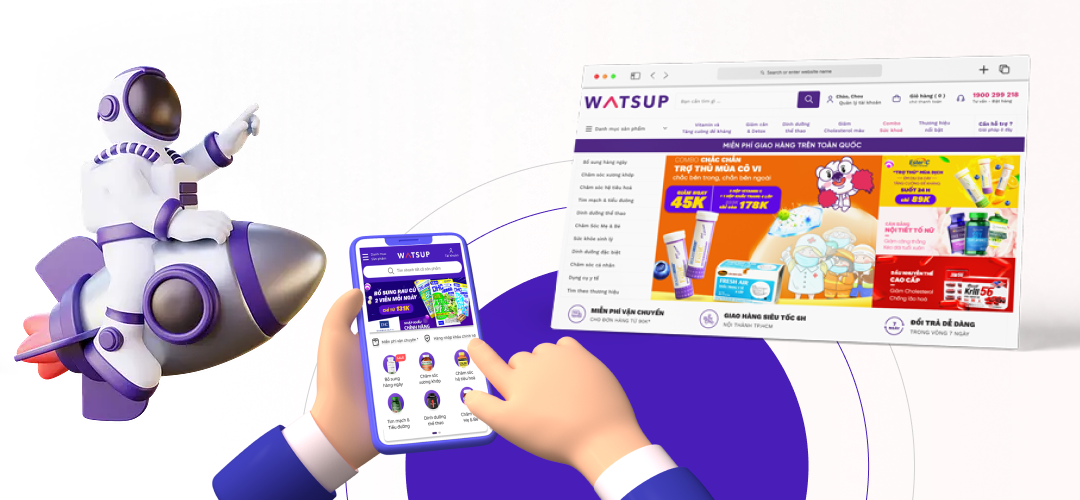
My role
- Art Director
- Marketing and Branding Manager
- UI/UX – Graphic Designer
My team
Vy Nguyen – Developer
Tools I used:
- Figma
- Adobe Illustrator
- Adobe Photoshop
In 2020, my friends and I turned our passion for health and wellness into a business. My previous experience working in startups helped me to gain a variety of skills and take on various roles within the company. However, starting a business during a pandemic presented additional challenges. Despite these challenges, I remained determined to pursue my passion and establish my own business.
Goal
- Design a responsive website that is easy to navigate and provides a seamless online shopping experience for customers.
- Provide clear and concise product information to help customers make informed purchasing decisions.
- Improve customer satisfaction through fast and efficient checkout process and reliable delivery service.
- Increase brand awareness and sales through targeted marketing campaigns and partnerships.
- Acquire new users and launch the website as quickly as possible.
- Deliverables: Mobile and Desktop compatible screens (Responsive).
Problem
- Limited resources, as there were a large number of categories and products to design.
- Limited user research due to budget constraints.
- Building trust and security as a new brand, as we needed to reassure customers about their personal and financial information.
How I solve it
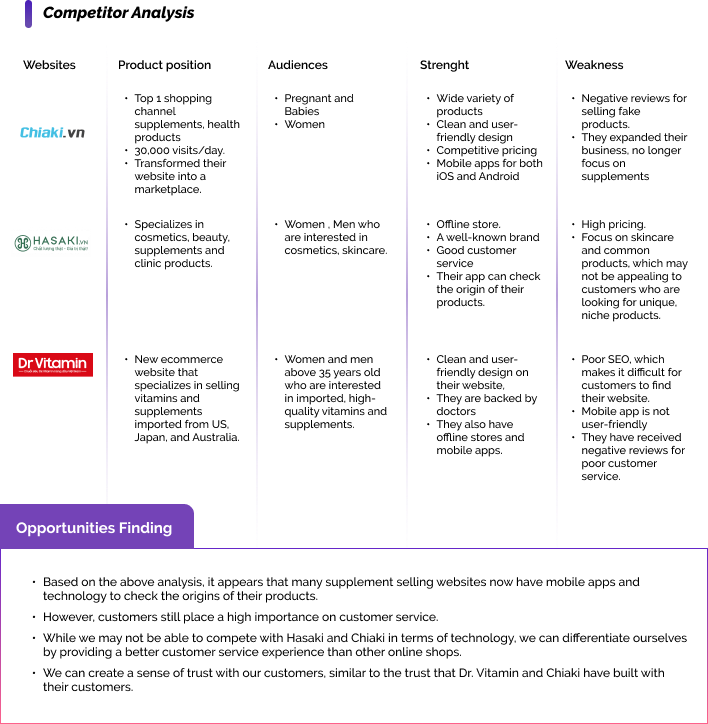
- Conducted a competitive analysis to understand the strengths and weaknesses of our competitors’ websites.
- Use existing research and informal feedback from friends, family, and colleagues to inform design decisions.
- Gathered data from real-life customer interactions to inform our design decisions and validate our assumptions
- Skipped the low-fidelity and high-fidelity design phases in order to save time and meet the tight timeline. I worked closely with the developer to ensure that the design was feasible and met the needs of the user.
Design Iteration
1. Conduct research:
Here are top 3 of our concerns:
- How can we gain customers’ trust on Watsup?
- With so many online shops, including those on Shopee, who is our target customer and why would they choose us?
- Who are our competitors and what makes us better than them?
Creating an e-commerce site is not a new or innovative idea in today’s world, as many people are familiar with shopping online and large tech companies invest heavily in user research. As a small startup, we do not have the resources to do the same,
- I applied Jacob’s Law to gain trusts from new user: users spend most of their time on other sites, make sure our website is easy to navigate and has a similar user experience as other sites.
How I applied Jacob’s Law:
- I looked to successful sites in Vietnam. In particular, I was impressed UX of Bachhoaxanh.com, which is optimized for users with lower levels of technical proficiency.
- Observe user behavior: Based on my experience studying the markets in China and Vietnam, I noticed similarities in user behavior. These insights led me to optimize the UX of our e-commerce site with a focus on colorful.
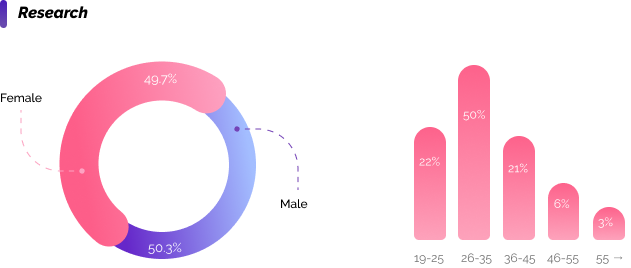
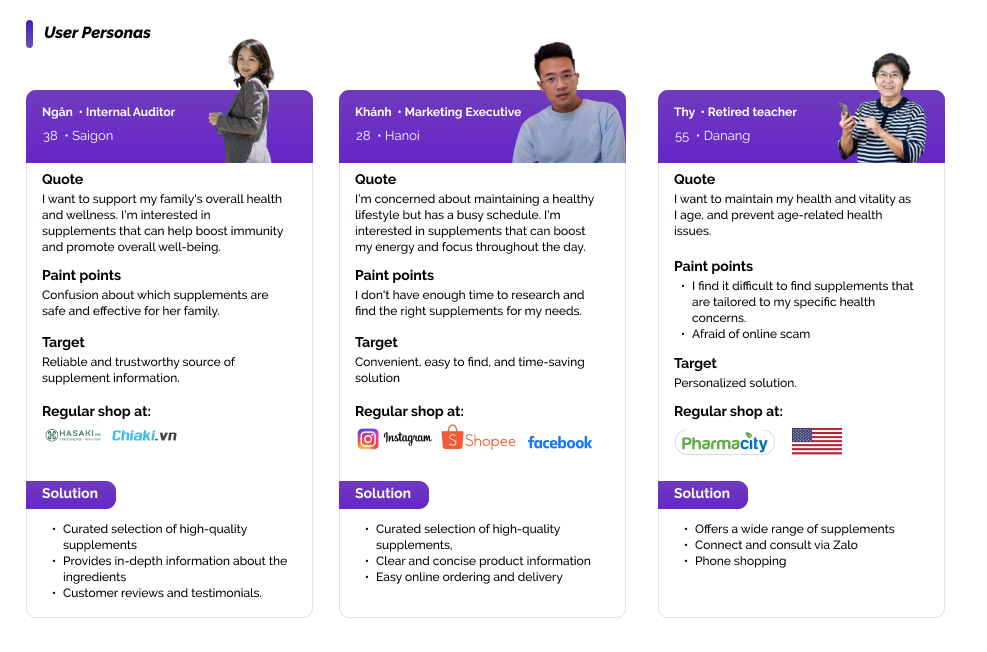
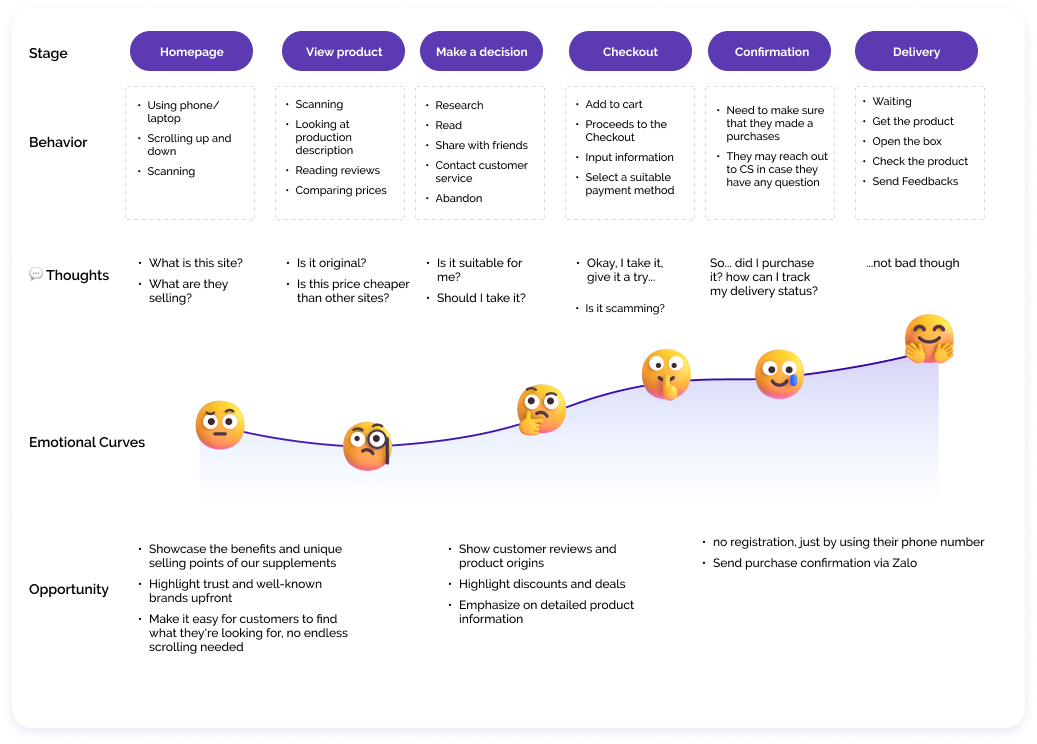
- To gather more specific insights, we conducted a survey among friends and relatives, asking about their supplement purchasing habits and what features they look for in a trustworthy website.
2. Design the user interface (UI)
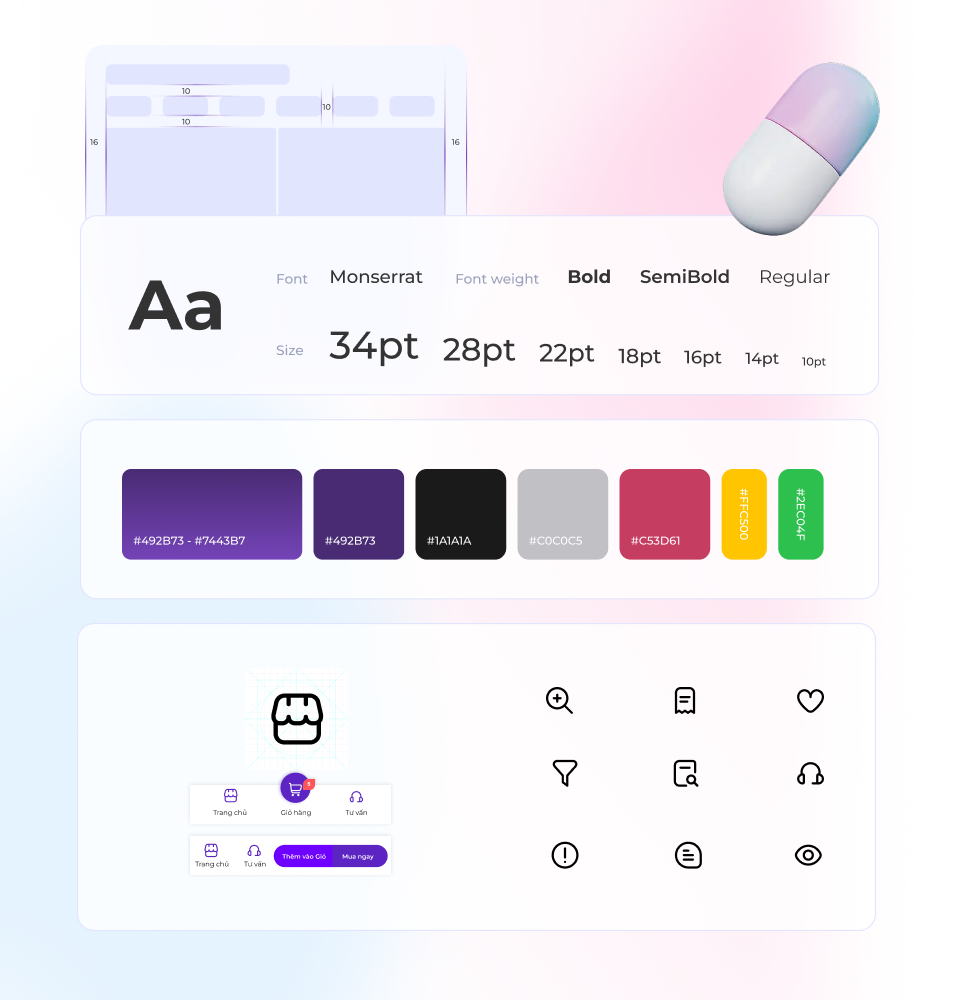
Due to time constraints and my role as the final decision maker for the design, I skipped the lo-fi and hi-fi design phases.
Instead, I compiled a list of ideas for how I wanted to build Watsup and began designing immediately. Launch it as soon as possible.
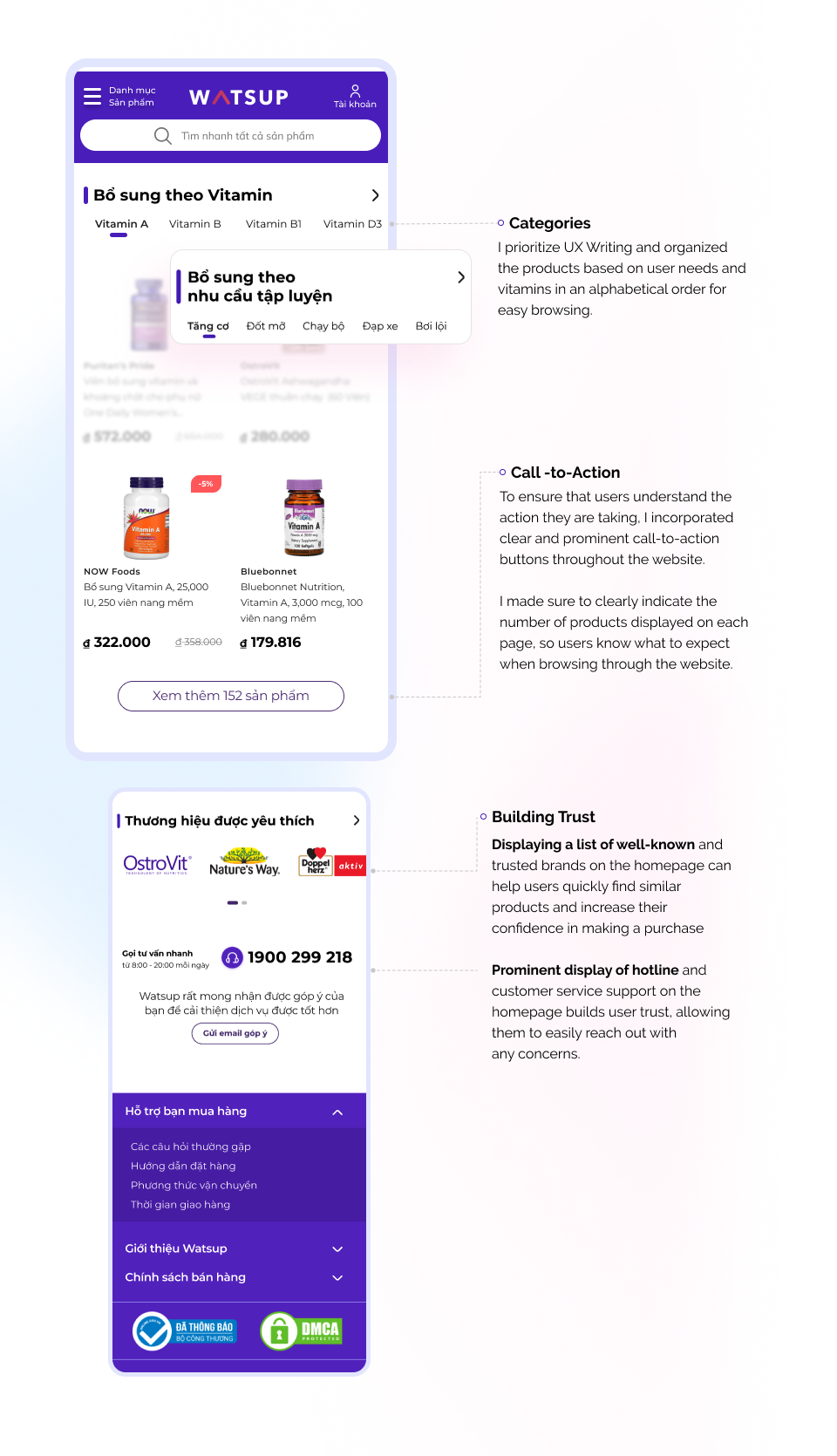
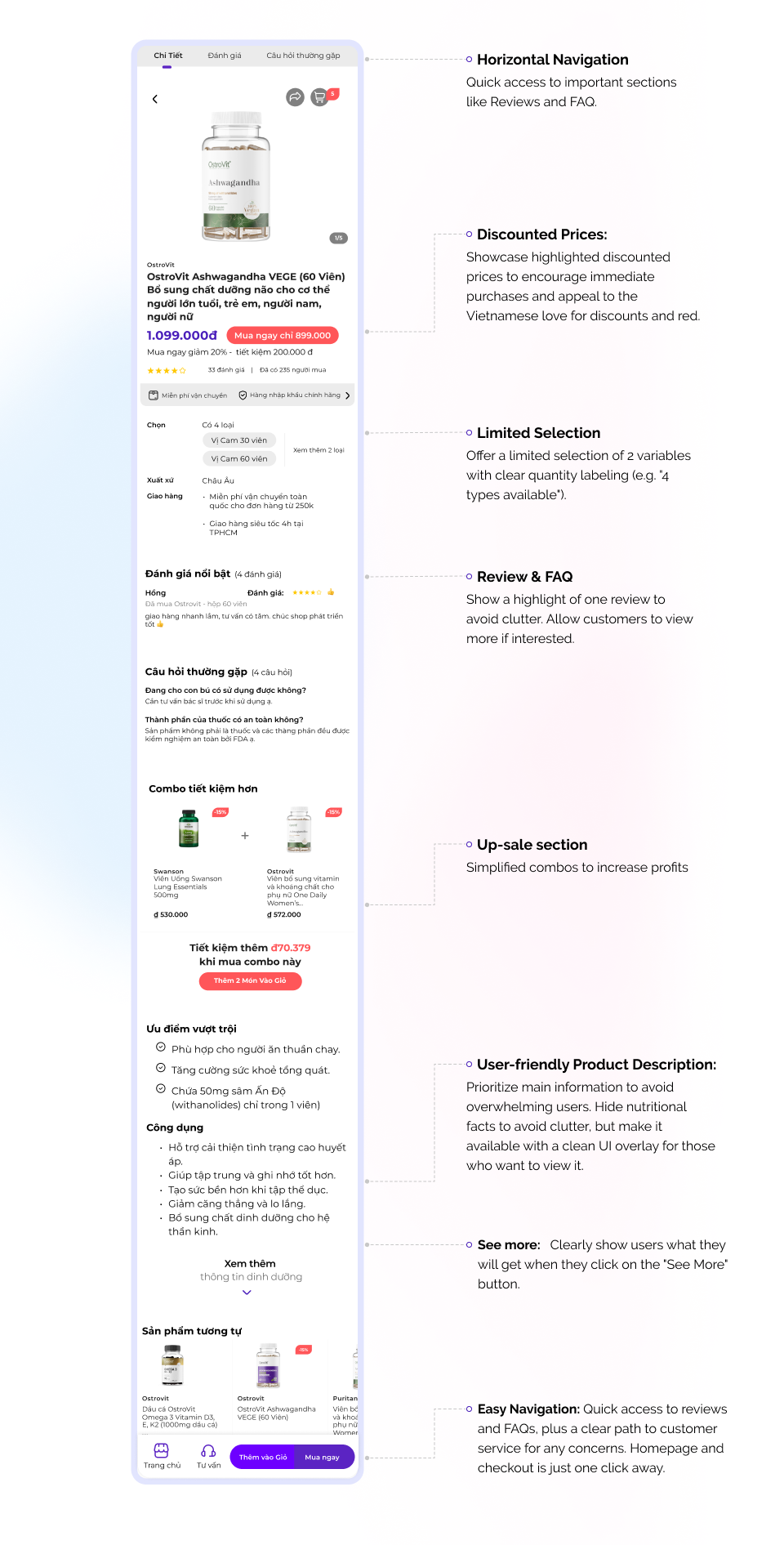
- Focused on providing detailed product information, particularly nutrition facts, to increase trust and reliability
- Highlighted trusted brands
- Allowed users to track orders with just their phone numbers, as I learned from Bachhoaxanh’s UX
- Emphasized hotline and Zalo as they are popular among Vietnamese users, who are more familiar with these than emails
- Highlighted unique selling points such as free delivery and recommendations from pharmacists
- Offered a range of payment options including bank transfer, Momo, and ZaloPay.
- Segmented supplements by profession, age group, and diseases to avoid cluttered appearance and better cater to specific needs.
- Emphasize Blog for emphasize information and SEO.
4. Test the prototype (UX)
The prototype was tested within the team with 3 age groups. Insighs from MVP testing:
Female / Male – 20 – 25
- No issues with website use
- Appreciated clear display of nutrition information and familiar brands.
- Some found product display to be irrelevant and found the site to have too much text
Female – 30 -34
- Confused about the nature of the site and found it plain and unappealing.
- Had difficulty finding desired products.
Female – 44 – 49
- Struggled with readability due to large amounts of text.
- Participants preferred product display similar to that of iherb.
- They don’t like to place order on website, prefer make it via call
6. Refine the design
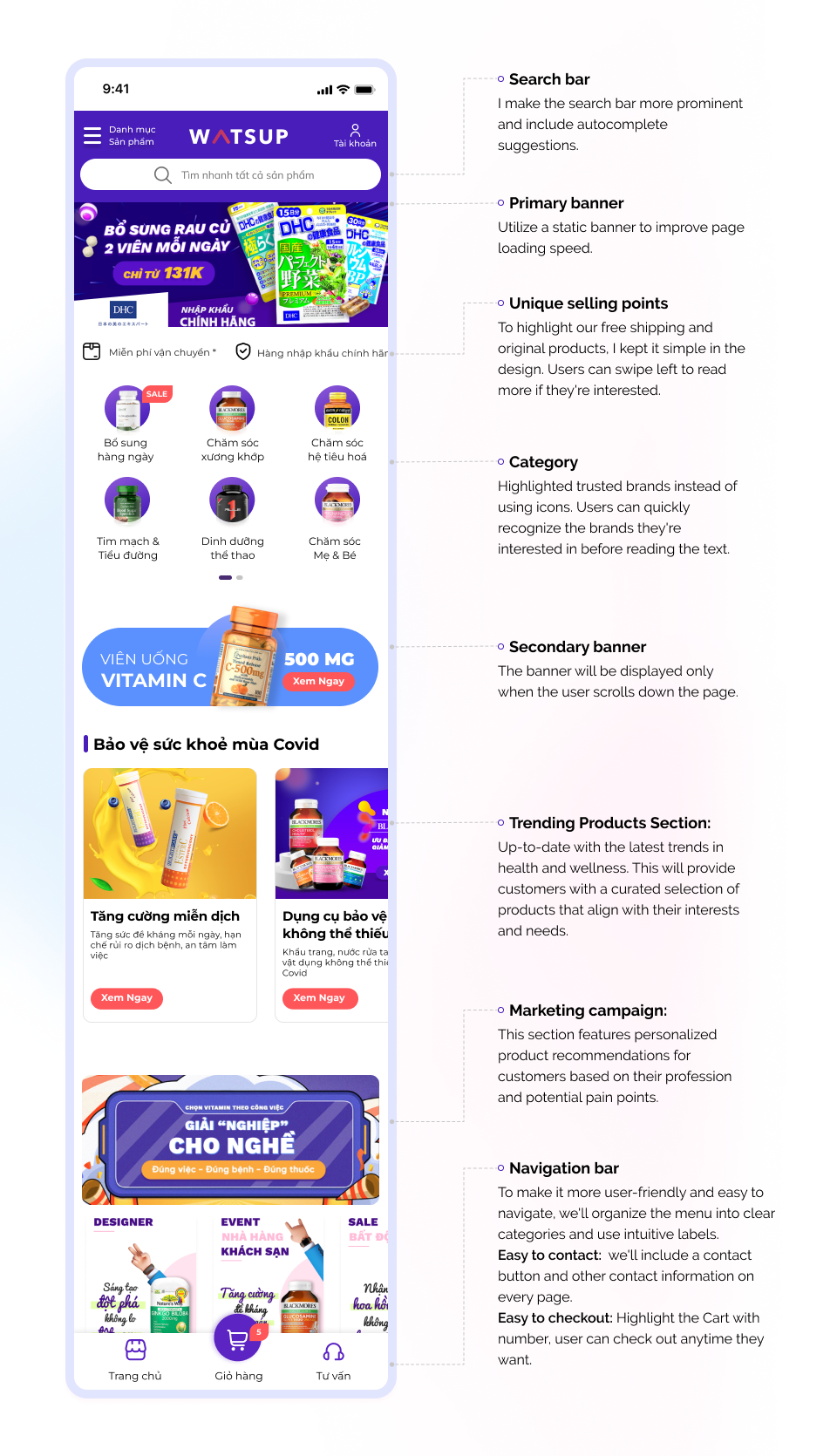
Refined website based on MVP testing insights:
- Clearly display all products
- Increase spacing on homepage banner
- Improve font weight, color contrast, and size for readability
- Remove gift section
- Add additional product
- Categories to front page
- Create section for specific professions
- Personalize chat support to let customers know who they are communicating with
- Keep existing product page as is.
7. Final Design
I quickly finalized the design for Watsup but ran into problems during the hand-off to developers.
I had previously worked with Vy on several projects and assumed she knew everything about the flow and products, so I left everything for her to manage. This caused difficulties for her and the final product and drained out of her energy.
To quickly launch the website and fix my mistake:
- I organized my assets in Figma
- Collaborated with Vy on front-end coding
- Refined the design after the beta version was released.
How to measure success:
- Project was launched on time on both mobile and desktop versions.
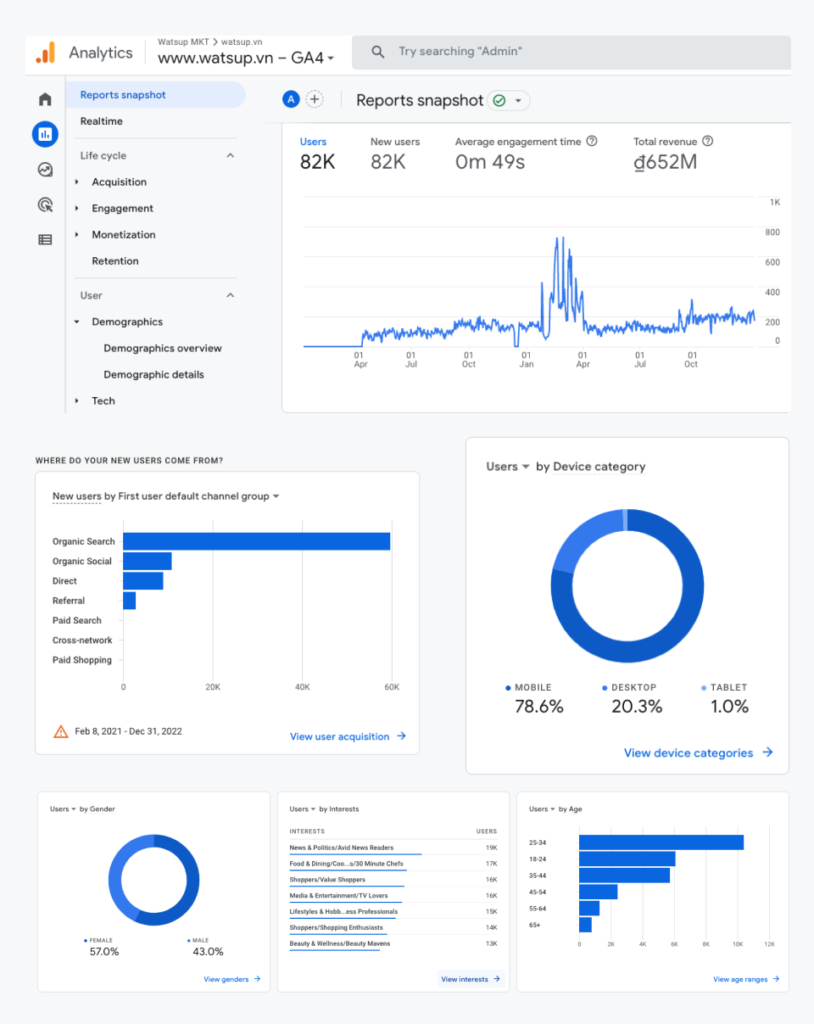
- Meeting the project goals, targeted the right user groups: Women from 24-35 years old
- Acquisition of new users: In the first four months after launch, we gained 24k new users, with 13k coming from organic search.
- Brand awareness and customer satisfaction: Customers trusted the brand and made purchases through the new website
Conclusion
Watsup taught me valuable lessons about being a small business owner and working with a team. Despite facing some difficulties and setbacks, we were able to launch the website on time and receive positive feedback from users in terms of brand awareness and customer satisfaction.
Overall, the experience of designing Watsup was both rewarding and challenging, and it was a great learning experience and I am proud of what we were able to achieve with limited resources.
Learning
- Communication: Good communication is key to success, especially when working with a team. It’s important to clearly convey ideas and expectations to avoid misunderstandings and conflicts.
- Adaptability: Working on a startup requires being open to change and adaptability. Working with a tight budget and limited resources can be challenging, but it also helped me empathize with customers who face similar constraints. It taught me to be creative in finding solutions that fit every business.
- Time management is crucial when taking on multiple roles. I learned to manage my time better to avoid burnout, feeling overwhelmed and missing deadlines.
- Consistency in the working process is important, even when working with friends. I learned to follow the process I set to avoid difficulties for the team.
- Resilience: Starting up is not easy, and there will be challenges and setbacks along the way. It’s important to stay resilient and persevere through these challenges.